 WODI


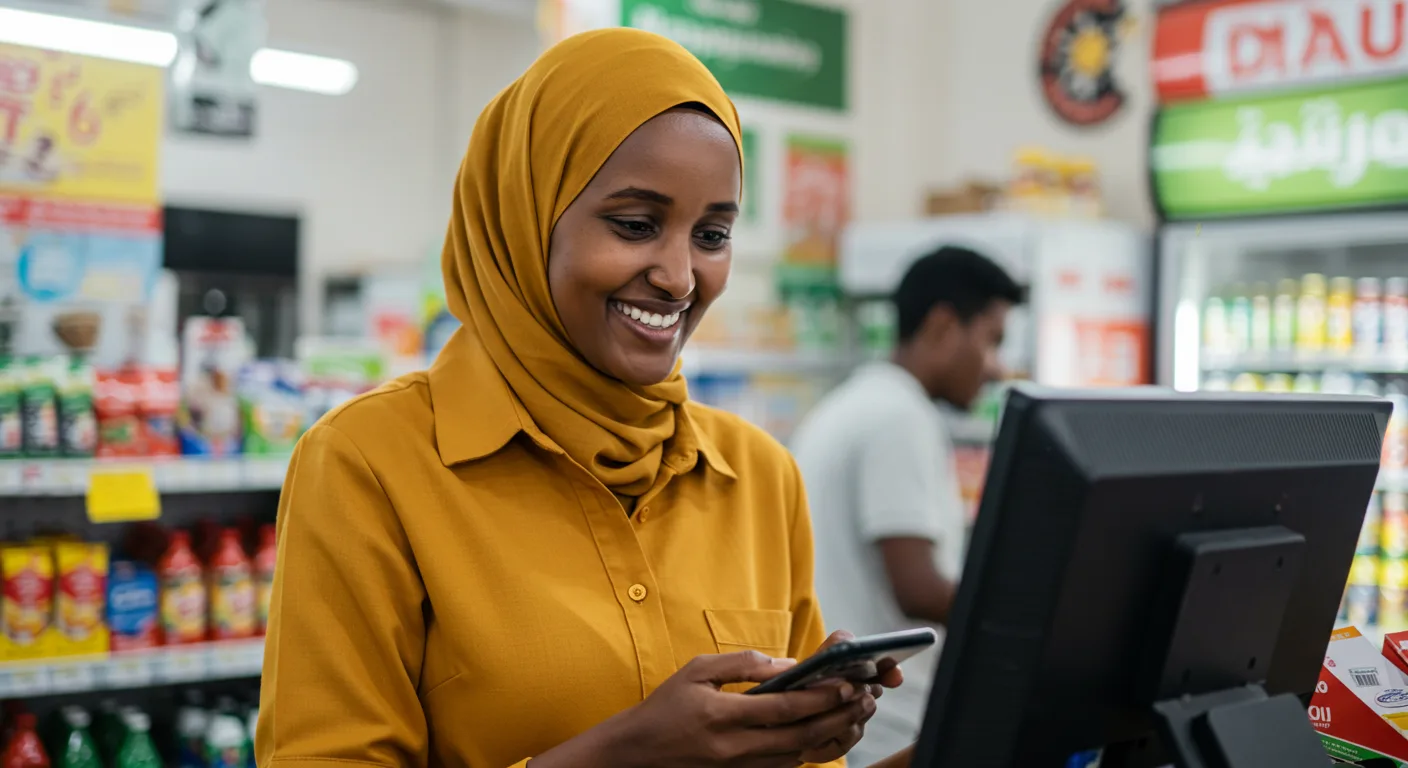
How can a business tell whether digital payments add real value?
A digital payment is a transfer made electronically—for example, through mobile money, a card or another payment account. For a merchant, accepting one is an operating decision. The important question is not simply whether the technology is available. It is whether the channel solves a genuine problem for the business and its customers.
CGAP cautions that cash can be a better option than a basic digital payment solution in some markets. Its analysis says providers need offerings grounded in areas where digital services add genuine value [S4]. This does not mean that cash is always preferable or that digital payments are unsuitable. It means that a merchant should compare the practical experience of both methods instead of assuming that digital automatically means better.
What business problem are you trying to solve?
Start with the problem, not the product. A merchant might want to serve customers who do not carry cash, reduce time spent handling change, create clearer sales records or receive remote payments. These are possibilities to investigate, not guaranteed outcomes.
Ask customers how they currently prefer to pay and whether they would actually use the proposed channel. Then ask the provider for clear information about charges, settlement time, transaction limits, refunds, disputed payments and what happens during a network interruption. Settlement means the process through which accepted money becomes available for the business to use or withdraw.
The September 9, 2026 announcement in a retrieved World Bank source describes an IFC initiative intended to help financial institutions in emerging markets expand access to digital payments for consumers and small businesses [S3]. This is evidence of institutional activity around payment access, not proof that every merchant can obtain a suitable service or that adoption will improve every business.
Why should records and account type matter?
Payment records can help a business compare sales received with money deposited. This comparison is called reconciliation. A simple reconciliation routine checks whether each recorded sale appears in the payment account, whether any charge was deducted and whether a refund or failed transaction needs attention.
An IFC study examined mobile-money activity and a survey of 1,275 micro, small and medium-sized enterprises using one mobile network operator in an anonymized Sub-Saharan African country [S1]. The report found businesses using individual mobile-money subscriptions and showed that transaction patterns could help identify likely business users [S1]. Because the operator and country were anonymized, these findings should not be treated as a result for every country, provider or merchant.
For a business owner, the practical lesson is to check whether the provider offers an appropriate merchant or business account and to read its terms. A personal account may have different permitted uses, records or transaction arrangements. Moving to a business product does not by itself guarantee lower costs, financing or business growth.
What is the VALUE check?
Use **VALUE** as a practical decision aid. It is a suggested checklist, not a proven formula:
- **V — Verify customer need:** Ask a small group of regular customers which payment methods they would genuinely use.
- **A — Add up the operating burden:** Review disclosed charges, equipment, connectivity, staff time, withdrawals and reconciliation work.
- **L — Link every payment to a record:** Decide how staff will issue receipts and match transactions with the sales log.
- **U — Understand failure procedures:** Write down what staff should do for delays, duplicate payments, refunds, disputes or unavailable networks.
- **E — Evaluate a limited trial:** Test the channel on a manageable scale and review the results before expanding it.
What might a limited trial look like?
**Hypothetical example:** A small neighbourhood shop notices that some customers ask to pay by mobile money. The owner obtains the provider's merchant terms, trains two staff members and offers the channel for a limited trial period. Each day, the shop records digital sales separately, checks them against the merchant account and notes failed or delayed transactions. At the end of the trial, the owner reviews actual customer use, disclosed charges, staff time and unresolved problems. The decision to continue is based on the shop's records—not on a promise that digital payments will increase revenue.
How does this connect with financial inclusion goals?
UN Sustainable Development Goal 8 includes Target 8.3, which calls for policies that encourage the formalization and growth of micro, small and medium-sized enterprises, including through access to financial services [S2]. Target 8.10 calls for strengthening domestic financial institutions to expand access to banking, insurance and financial services [S2]. These are policy goals, not proof that access has already been achieved locally or that a particular payment product is suitable.
What should you do next?
Choose one payment channel you are considering and complete the VALUE check using the provider's current terms and your own sales process. Record unanswered questions before signing or scaling. Digital payments should earn their place in the business by solving a measured operating need.
One lesson to take with you
Choose payment tools for business value, not digital appearance
Sources and further reading
Explore the original sources behind this lesson.
- [S1] [PDF] Small Businesses and Digital Financial ServicesInternational Finance Corporation · Accessed September 15, 2026
- [S2] Goal 8 | Department of Economic and Social AffairsUnited Nations · Accessed September 15, 2026
- [S3] World Bank Group Launches Initiative to Help Local Financial Institutions Expand Digital Payments in Emerging MarketsWorld Bank · Accessed September 15, 2026
- [S4] Digitizing Merchant Payments: Why and How | CGAP Research & PublicationsCGAP · Accessed September 15, 2026
- [S5] [PDF] IFC Mobile Money Study 2011 - World Bank Documents & ReportsWorld Bank · Accessed September 15, 2026